Australian inland data center withdraws timeline due to regulatory hurdles.
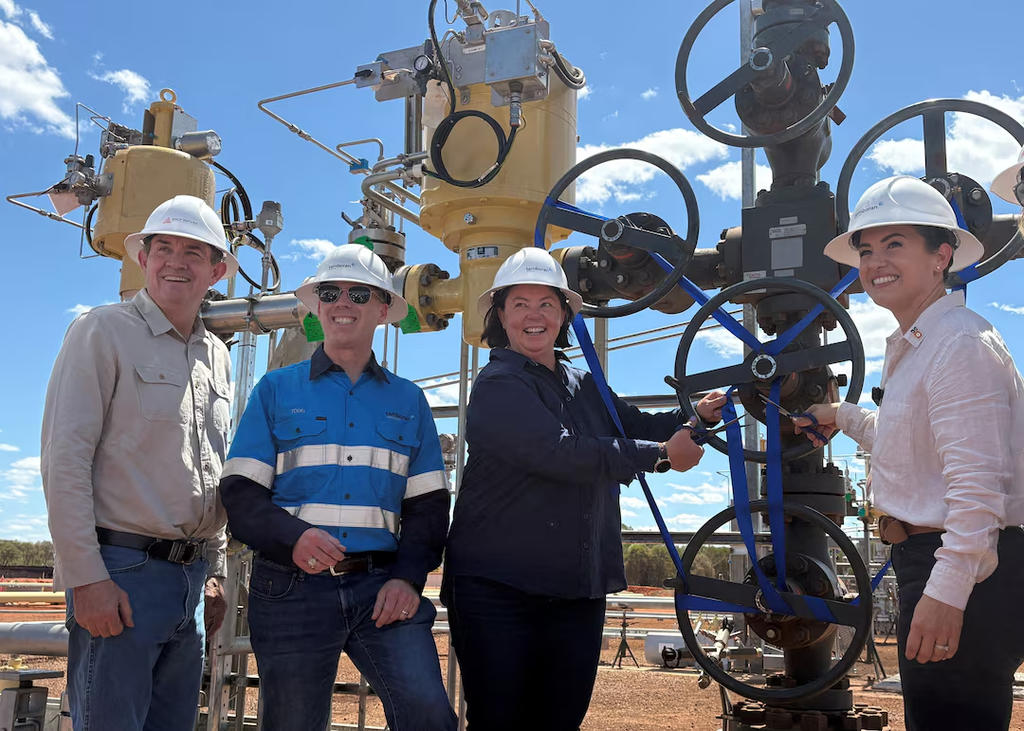
DARWIN/SYDNEY, Nov 2 (Reuters) – The developer of one of Australia’s largest planned data centers has scrapped its scheduled start date after regulators indicated that setting environmental parameters would take longer than usual—a setback to the nation’s ambitions of becoming a fast-track destination for artificial intelligence investment.
The startup, Energy North, stated that it has secured funding to build a massive data center—powered by natural gas and solar energy—on a cattle station in the country’s remote north, 683 kilometers (424 miles) from the nearest city. Four months ago, the company indicated in regulatory filings that the date for “first power” would be June 28, 2028.
However, after the Northern Territory’s environmental regulator ruled on October 7 to pause a seven-week deadline—a period intended for determining the hurdles the project must clear—the developers informed Reuters that they have abandoned their original timeline.
“The June 2028 date mentioned in our submission was merely a reference timeline; we are no longer working toward that schedule,” Daniel Hunter, Vice President of Project Development at Energy North, stated in an email.
The project is the largest in Australia to face such delays, illustrating that even in the remote northern reaches of the country, ambitions for data centers are encountering significant obstacles. The Northern Territory has sought to distinguish itself from Australia’s major urban centers as it competes for a share of the $7 trillion in global investment that McKinsey projects will flow into “AI factories” by 2030.
The region is banking on its vast, uninhabited tracts of land and abundant sunshine—home to 260,000 residents across an area twice the size of Texas, with solar irradiance levels comparable to the Sahara Desert—to attract projects, while also leveraging newly tapped, substantial shale gas reserves as a backup power source.
However, regulators in the Northern Territory have paused the approval process for Energy North, stating they will seek guidance from the federal government. The federal government is currently “developing policy expectations for developers of data centers and artificial intelligence infrastructure,” though no new timeline has been provided.
Hunt stated that the project remains unaffected for now, with a specific timeline to be confirmed once regulators finalize the terms for an environmental impact assessment—a process designed to identify and address potential adverse effects. He declined to disclose the source of funding for the project.
Even an isolated territory is not immune to pushback.
Energy North’s “Project Ares” boasts a capacity of 1 gigawatt—four times the scale of a data center expansion in Melbourne that developer NextDC (NXT.AX) postponed this month due to energy supply concerns. It is also ten times the size of a project in Sydney that was withdrawn by Goodman (GMG.AX) following strong opposition from local residents.
“Our outdated planning framework was not designed for proposals of this nature,” says urban planner Adam Baker, who has authored environmental impact statements for infrastructure projects and provided consultancy services to the government.
“While schedule disruptions are commonplace, I wouldn’t overlook the issue of a lack of social license. There is a high level of concern within the community, and this concern is reflected in the project itself.”
In its assessment of Energy North’s proposed 191-square-kilometer (74-square-mile) data center complex—which includes gas turbine systems, a solar power plant, an airfield, and accommodation for 4,300 construction workers—the Northern Territory Environment Protection Authority warned that the project would result in 10 distinct impacts, ranging from placing strain on water supply systems to the destruction of sacred Indigenous sites.
The authority stated that it “lacks confidence in the effectiveness of the proposed measures to address potential significant impacts.”
Northern Territory Minister for Business Robyn Cahill has indicated that her government is in discussions regarding 12 data center-related projects; however, she did not respond to requests for comment.
Feasibility Analysis
The gap between aspirations and reality is not unique to the Energy North project. Beetaloo Energy (BTL.AX) has proposed the construction of a data center near Darwin that would be twice the scale of the Ares project. Based on the company’s estimate that 200 terajoules of natural gas are required per gigawatt, this data center would consume up to 400 terajoules of natural gas daily.
This volume is ten times the gas flow from the only currently producing project in the Beetaloo Basin—Tamboran Energy’s Shenandoah South field. Beetaloo Energy plans to commence small-scale production by the end of the year.
These two data centers alone would require 3 gigawatts of power—roughly ten times the peak demand of the entire Northern Territory electricity grid. Both companies have stated that their energy supply will ultimately combine renewables with on-site gas-fired generation, bypassing the grid. Details regarding the other 10 projects in the Northern Territory have yet to be disclosed.
Meanwhile, the Northern Land Council—an organization representing Indigenous traditional owners—stated in a submission to an ongoing federal inquiry that in a region where one-quarter of the population is Indigenous, the consultation process requires travel, translation, and multiple site visits; accelerating this process “does not equate to obtaining consent quickly.”
Romy Carey, CEO of the Northern Territory Cattlemen’s Association, stated that the association expects data center developments to be “effectively regulated and properly implemented, so as to safeguard pastoral operations and the land, water, and environment upon which both industries depend.”
Rolf Gerritsen, a professor at Charles Darwin University and former head of policy in the Northern Territory Chief Minister’s office, noted that while the Northern Territory government might choose to disregard objections from stakeholders, it cannot ignore such concerns if they are escalated to the Federal Court or the High Court. He said, “If the number of opposing groups increases… regardless of what the development proposal may be, it often ends up in a stalemate.”