Speaking about the Signature 27, Motorola’s Shivam Ranjan said, “This is the best phone we have ever built.”
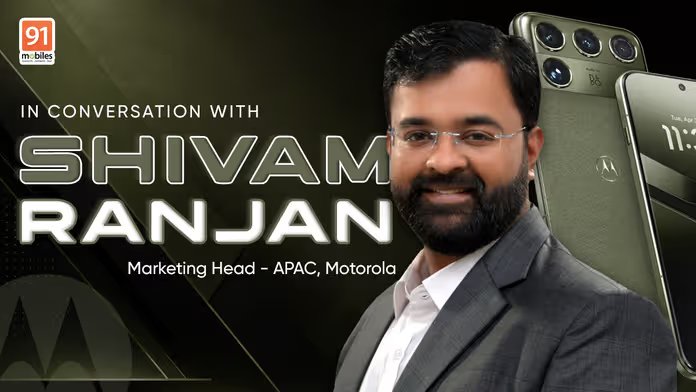
Motorola is targeting India’s premium smartphone market with the launch of the Signature 27, billing it as the company’s best phone to date. In an interview with 91mobiles, Shivam Ranjan, Motorola’s Head of Marketing for Asia-Pacific, detailed the device’s specifications, the rationale behind selecting a top-tier Qualcomm chip, and the company’s pricing strategy for the Indian market—where smartphone prices have been steadily rising. While the launch date and price for India have not yet been announced, Ranjan acknowledged that memory shortages are placing immense pressure on the entire industry.
Motorola’s Commitment to the Signature 27
Ranjan stated that Motorola has invested heavily in the chipset, describing the Snapdragon 8 Elite Extreme Gen 6 as the most powerful chipset available, featuring significant improvements across CPU, GPU, and NPU performance. He linked this to Motorola’s AI-focused value proposition: powered by a more robust NPU and what he described as a groundbreaking six-antenna design, the phone supports both on-device AI and cloud-based AI agent models. Ranjan noted that no other phone currently employs a six-antenna configuration, a design expected to boost cloud connectivity and download speeds.
In terms of cameras, the Signature 27 features a 50-megapixel Sony main sensor and a 200-megapixel periscope telephoto lens. Ranjan stated that the phone would set a new benchmark for photo and video capture. He added that Motorola has been committed to improving its cameras based on user feedback—noting that DxOMark rated the Razr Fold as having one of the best cameras among foldable phones.
The phone also incorporates what Motorola calls the “Arctic Mesh Cooling System,” which combines diamond gel, liquid metal, copper mesh, and a 3D vapor chamber that is 25% larger than the one found in last year’s Signature model. Ranjan noted that while last year’s slim Signature model didn’t suffer from overheating issues, this new cooling system is designed to allow the faster chip to deliver peak performance without throttling. He added that there are other details about the phone that cannot be disclosed at this time.
Why Motorola Chose the “Extreme” Chip
I asked Ranjan why Motorola chose to use the “Extreme” chip rather than the entry-level Snapdragon 8 Elite Gen 6. He explained that since last year’s Signature 26 marked their entry into the flagship market, they had aimed for a balanced product rather than one that prioritized performance above all else; consequently, that phone used a Snapdragon chip that was slightly less powerful than the high-end Elite version.
“The Signature 27 is our all-out effort.”
However, customers also told Motorola they wanted a true flagship model, and the Signature 27 is designed to meet that demand. “The Signature 27 is our all-out effort,” he said, adding that Motorola aims to compete head-to-head with any rival in terms of flagship performance and user experience. He also emphasized that the phone is about more than just specifications; the Signature 27 isn’t merely a “high-performance machine,” but a device designed to reflect the user’s personality.
On Pricing and Memory Shortages
I asked Ranjan about the connection between the “Extreme” chip and this year’s price increase. He stated that the entire industry is undergoing a memory “super-cycle” that no brand can escape; all manufacturers, including Motorola, will be affected by rising prices. He added, however, that as part of Lenovo Group, Motorola is better positioned than many competitors to handle this challenge.
While he could not disclose the price of the Signature 27 in India, he noted that Motorola sees a business opportunity there. Consumer demand might contract, but it will not disappear; buyers will focus more than ever on “value for money”—a concept he defines as the relationship between price and features, rather than price alone. To make the Signature 27 more attractive, Motorola will offer bank offers, deals through non-banking financial companies (NBFCs), installment plans, and after-sales services like the “Signature Club.”
To ensure the Signature 27 remains accessible, Motorola will provide bank offers, NBFC deals, installment options, and after-sales benefits such as the Signature Club.
Regarding consumer reactions to the price hikes over the past few months, Ranjan noted that the initial shock and disbelief—with some consumers suspecting brands of profiteering—have passed. People now understand that the memory super-cycle is the new normal. However, he believes consumers do not yet fully grasp the extent of the price changes for products of equivalent value. “I personally think it will take time, especially in India,” he pointed out, noting that consumer income growth is not keeping pace with price increases. He expects consumer acceptance to continue growing but believes it will take a few more months.
On Design and Partnerships
In addition to its long-standing collaboration with Pantone, Motorola has established a multi-year exclusive partnership with Bang & Olufsen. Ranjan stated that the collaboration with B&O goes beyond sound quality to encompass the brand’s renowned design and craftsmanship—qualities he believes align perfectly with the Signature series’ positioning, which targets consumers with refined tastes who seek unique products. More broadly, he explained that Motorola’s strategy is to partner with experts like Corning, Dolby, and Bose rather than trying to reinvent the wheel. The Signature 27 headphones themselves incorporate a variety of materials, including ceramic, silk, and fabric.
How did Motorola break into the top five in India?
Ranjan stated that Motorola secured a spot among the top five players in the Indian market during the first quarter with an 8.9% market share, and the company aims to climb to the third position within the next few years. He attributed this achievement to a combination of factors:
A competitive product portfolio: Products spanning all price segments.
AI choices: “Moto AI” acts as an orchestration layer, allowing users to choose between Gemini, Copilot, or Perplexity.
Imaging: Motorola noted significant improvements in camera performance, driven by R&D at its Bangalore center specifically tailored to Indian skin tones.
CMF (Color, Material, Finish) and partnerships: A focus on design aesthetics and collaborations with companies like Bose and Pantone.
Ecosystem: A lineup that includes earbuds, watches, tablets, and PCs alongside smartphones, facilitating cross-selling.
Software updates: Ranjan stated that Motorola was the second brand—after Google—to roll out Android 17, a move made in response to past criticism regarding update delays.
He emphasized that the common thread connecting all these efforts is Motorola’s commitment to acting on consumer feedback, citing the improvements made in response to earlier criticism regarding cameras and software updates.
The Signature 27 is set to be one of the first phones in India to feature the Snapdragon 8 Elite Extreme Gen 6 processor, joining the ranks of the iQOO 16 and Xiaomi 18 Pro. While Motorola’s move is ambitious, this push into the high-end market will also put its brand image to the test in a fiercely competitive landscape. Further details regarding the Signature 27’s launch date, pricing, and availability in India are expected in the coming weeks.